
Patients on
Their Phones.
Meet Them There.
Appointments Kept. Recalls Booked. No-Shows Slashed.
Healthcare still runs on phone trees, voicemail, and patient portals nobody checks. SMS closes that gap with a 98% open rate, two-way communication, and the compliance framework to back it up.
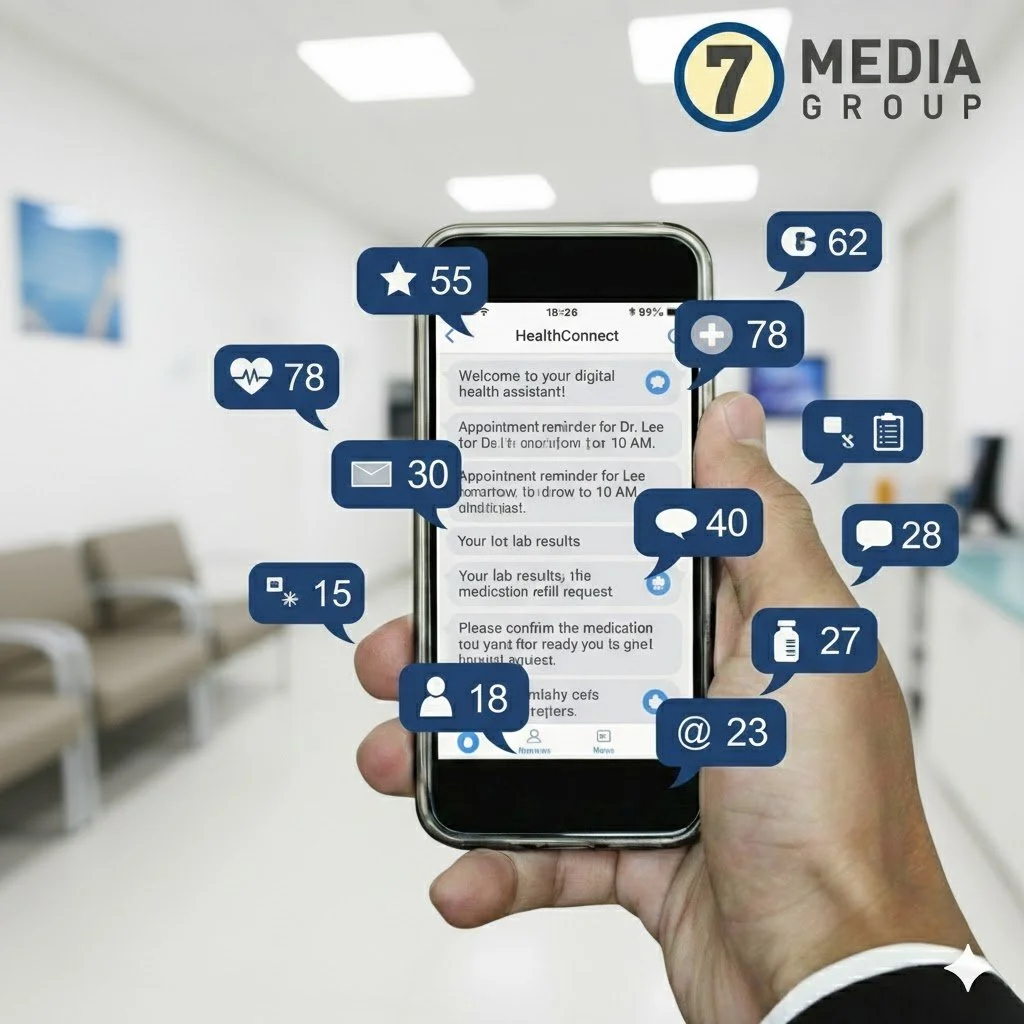
Where SMS Delivers
- Cutting no-shows and late cancellations
- Booking inbound leads fast — missed calls and web form fills
- Driving recalls and reactivation: 6-month, annual, overdue care
- Generating more reviews without the awkward ask
- Nudging high-margin consults — implants, Invisalign, Botox, derm packages, med spa
What SMS Won't Fix
- Phones that go unanswered
- A messy or unresponsive schedule
- A team that doesn't follow up
Patients respond to text communication at 209% the rate of phone calls. The phone tree is losing.
Prefer Phones for Provider Interaction
Patients already live in mobile-first communication. Your outreach needs to meet them there.
Want Appointment Reminder Texts
Patients aren't just tolerating reminders — they prefer them over calls and voicemail.
Attendance Improvement with SMS
Appointment attendance jumps 67% when providers communicate by text.
Reduction in No-Shows
Text reminders cut no-shows by up to 26%. At $186 per missed primary care appointment, that adds up fast.
Avoided Unnecessary Calls
Patients said text updates helped them skip calling in. Less call volume, less staff burden.
Felt More Connected to Care Team
98.2% satisfaction in one study. SMS doesn't just reduce no-shows — it builds patient loyalty.
of Patients Have SMS-Eligible Number on File
Versus 25% eligible for email. You have a bigger reach via text than you think — you're just not using it.
Increase in Confirmations
Automated text reminders can reduce no-shows to 5% or less while driving 150%+ more confirmations.
Open Rate — Read Fast
Patients don't check their portal. They do check their texts — within minutes of receiving them.
of Providers Mistakenly Believe Consumer Texting Is HIPAA-Compliant
That's exactly how organizations get exposed. Standard SMS is not HIPAA-compliant. What is compliant is a properly implemented system with HIPAA-safe messaging practices, clear consent flows, and lock-screen-safe content. 7 Media Group builds that infrastructure for you — so your program is compliant from day one.
TCPA. Carrier Rules.
HIPAA Risk.
Healthcare SMS sits at the intersection of all three. The approach is not complicated, but it has zero margin for sloppiness — in how messages are sent, what's included, and how consent is captured.
30% of providers mistakenly believe consumer texting is HIPAA-compliant. That's how organizations get exposed. We don't make that assumption, and we don't let clients make it either.
Two Message Types. Two Permission Levels.
Informational Texts
Scheduling, reminders, neutral follow-ups. Consent typically happens when a patient provides their number for care coordination.
Marketing Texts
Promos, membership plans, elective service pushes. Needs clearer, documented permission — and your proof needs to survive scrutiny.
What We Implement Day-to-Day
-
Clear Opt-In Language
No pre-checked boxes. No vague "updates." Every opt-in is explicit and documented.
-
Proof of Consent
Timestamp, source, exact wording shown, and the phone number — all stored and retrievable.
-
Automatic STOP & HELP Handling
STOP means stop. Immediately and permanently. No exceptions.
-
Quiet Hours & Frequency Controls
Safe defaults built in. No messages at 6am. No daily blasts.
-
HIPAA-Safe Messaging
Texts stay lock-screen safe. Anything sensitive routes to a secure channel or a phone call — never in the message body.
The Flows That
Make Practices Money.
We don't set up texting and walk away. We build the flows that run every day and tie directly to appointments booked, patients retained, and revenue collected.
Lead Capture + Missed Calls
Someone calls and doesn't reach you. We text back fast and help them book. Speed matters — most practices lose these leads to the next name in search results.
Appointment Confirmation
Two-way confirmation, smart reminders, and reschedule prompts. No-shows drop without annoying patients who were going to show up anyway.
No-Show Recovery
"We missed you — want to reschedule?" A simple sequence saves the relationship and the revenue. Most practices don't have this running at all.
Recalls + Reactivation
The best practices don't hope patients come back — they run a recall engine. 6-month, annual, overdue care. Easy booking links. Clean STOP rules.
Reviews Without the Awkward Ask
We ask at the right moment, route unhappy patients to private feedback first, and never incentivize reviews. Clean process that actually works.
High-Margin Consult Growth
We don't spam discount codes. We run consult-first education sequences for implants, Invisalign, cosmetic dentistry, derm, and med spa services.
What We Track
Copy These.
Customize. Send.
Appointment Reminder
Recall / Reactivation
Missed Call Recovery
No-Show Recovery
Review Request
Consult Growth
"7 Media Group has been instrumental in our success. We observed a notable increase in patient flu vaccinations following our SMS campaign announcing availability. We highly recommend 7 Media Group for your medical practice or research facility."
Brandi Baldwin Director of Operations
Ready to Cut No-Shows
and Fill Your Schedule?
Let's take 20 minutes to walk through what a texting program looks like for your practice — no obligation, no sales pressure.